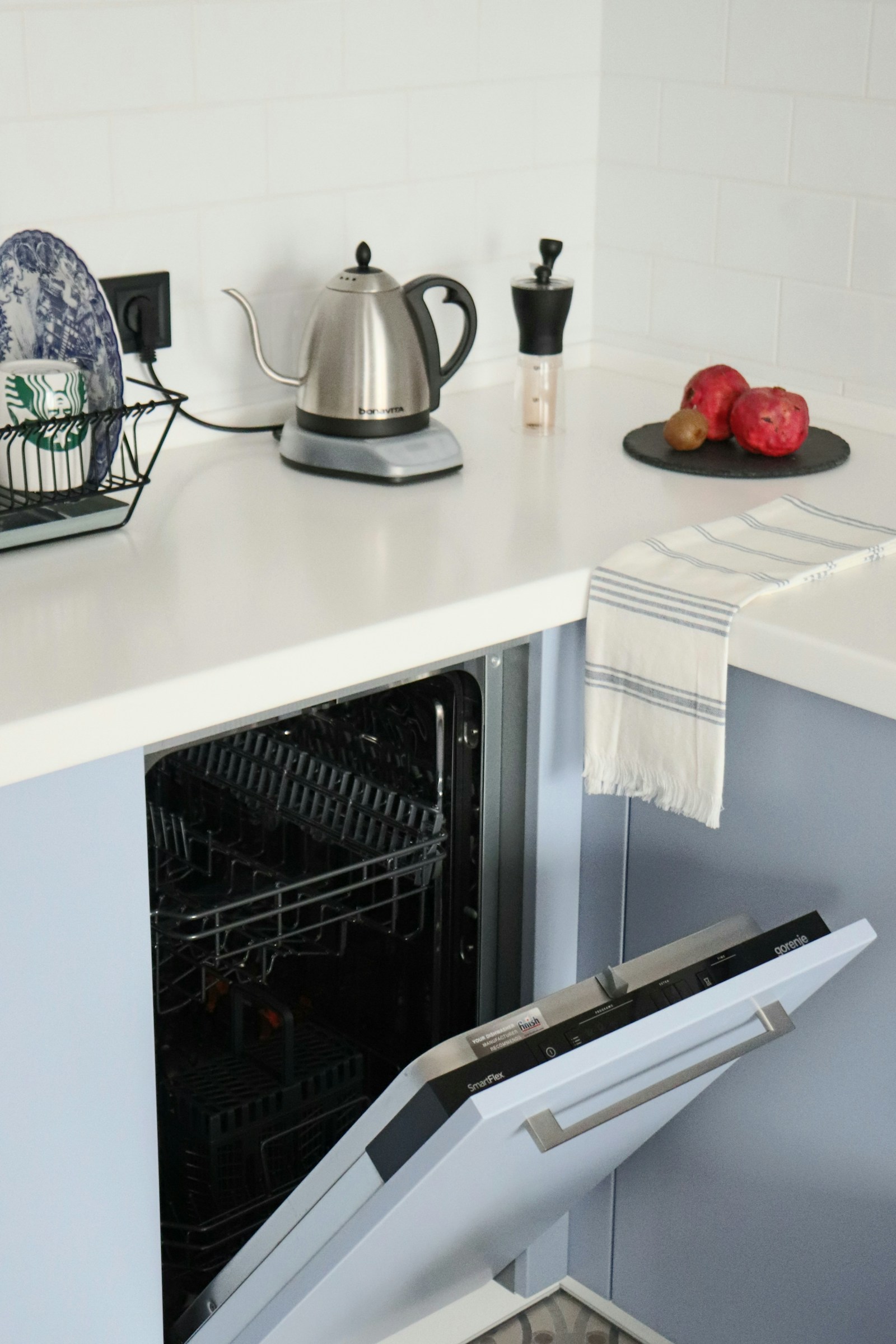
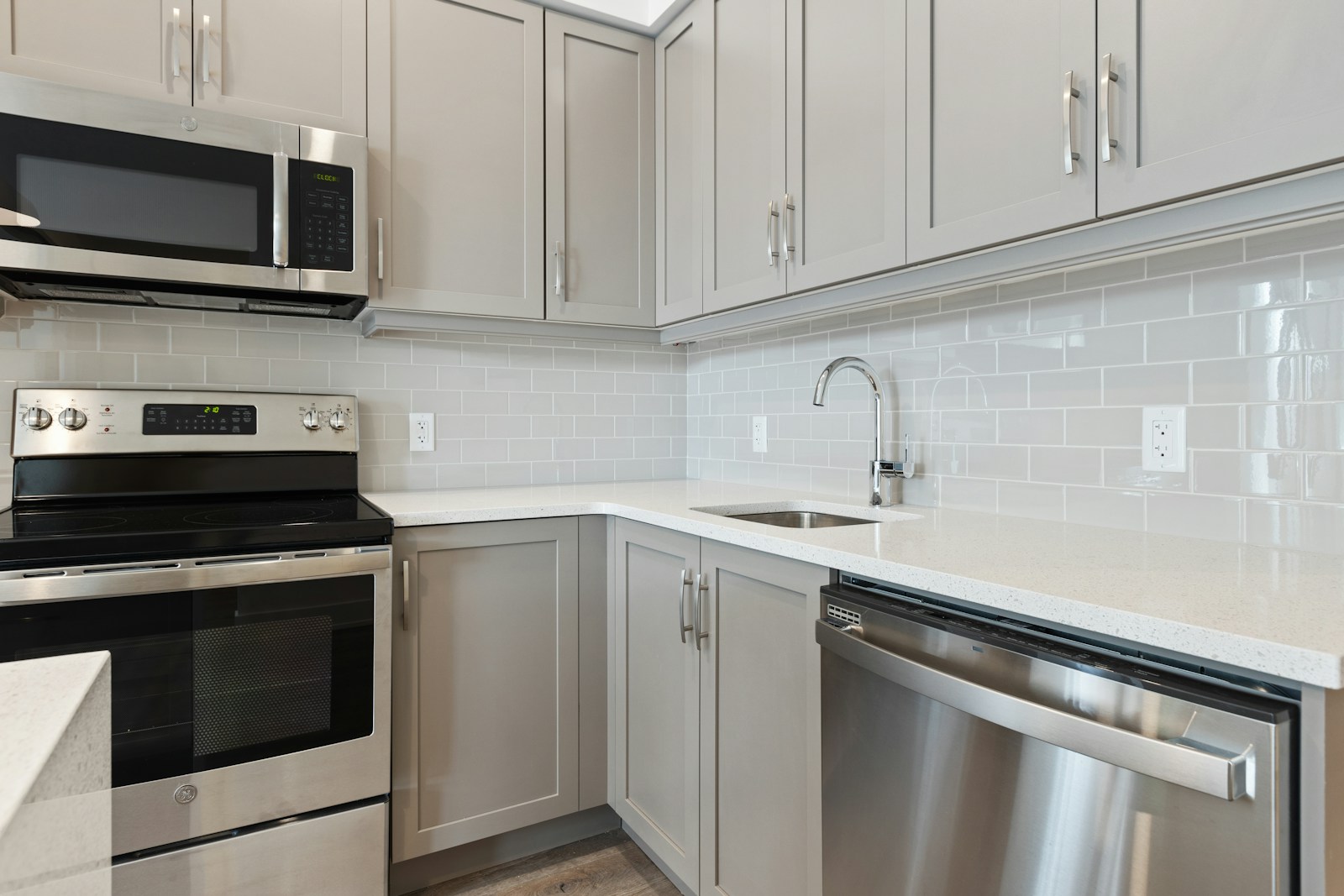
A dishwasher not drying well on a Monogram built-in is usually about rinse aid, loading, and cycle choice rather than a broken heater. Modern dishwashers rely on rinse aid and residual heat to dry, so a few adjustments usually fix damp dishes without any repair.
Why a dishwasher not drying happens
- Low rinse aid – rinse aid sheets water off so it evaporates; an empty dispenser leaves droplets.
- Plastics – plastic holds less heat and stays wet more than glass or ceramic.
- No dry boost selected – a heated-dry or extra-dry option helps a lot.
- Opening too soon – unloading before the dry phase completes leaves moisture behind.
First checks
Refill the rinse aid and set the dosage higher, select a heated-dry or extra-dry option, and let the cycle complete fully. Unload the bottom rack first so drips from the top do not fall onto dry dishes.
More habits that help
- Crack the door open at the end of the cycle to let steam escape and finish drying.
- Do not overload – items need space and airflow to dry.
- Angle cups and containers so water runs off rather than pooling.
Good loading helps drying as much as washing – see our loading tips. For routine care, read the dishwasher maintenance guide.
When it is a fault
If rinse aid is full, a dry option is selected, and dishes still come out soaked, a heating or vent fault is possible. Our dishwasher repair service can diagnose it – book a visit. Drying-option details for your model are on the manufacturer’s site, monogram.com.
Why Dishes Come Out Wet: The Condensation Drying Chain
A Monogram dishwasher not drying frustrates owners precisely because the dishes are clean, the wash worked, but everything is still beaded with water at the end. The reason lies in how a ZDT dries, which is fundamentally different from an old-fashioned dishwasher with a glowing element baking the load.
Monogram dishwashers dry chiefly through condensation, often boosted by a heated-dry option. After the final hot rinse, the dishes hold residual heat; the stainless tub walls are cooler, so water vapour migrates to the walls, condenses there, and drains away. The whole process depends on three things working together: a genuinely hot final rinse, rinse aid sheeting water off the dishes, and the items being loaded so water can run off rather than pool.
- Check the rinse-aid reservoir first. Condensation drying relies on rinse aid to break the surface tension of water so it sheets off; an empty reservoir is the single most common cause of wet dishes.
- Confirm the incoming water is hot enough, the system wants water near 120°F, because a cooler final rinse leaves less residual heat to drive the condensation cycle.
- Look for upturned cups, bowls, and container lids that cradle a pool of water; these cannot drain no matter how well the cycle runs.
- Enable the heated-dry option if your model offers it and you are still seeing dampness, especially on plastics, which hold little heat of their own.
Plastics deserve a special note: because they retain almost no warmth after the rinse, they offer no heat to evaporate the surface film and will always dry less completely than glass or stainless steel. Loading them on the top rack and using rinse aid helps, but some residual dampness on plastic is normal and not a fault.
If rinse aid is full, the water is hot, the load is sensibly arranged, and dishes are still soaking wet, the cause moves to hardware, most often the water-temperature thermistor (the same sensor a C7 code flags) misreading the rinse temperature, or a heating element that no longer boosts the final rinse. A C6 reporting incoming water too cold points the same direction, toward water temperature. Those diagnoses are work for certified technicians with genuine Monogram parts rather than another bottle of rinse aid.
Book Monogram dishwasher service
If these steps do not resolve it, our certified technicians repair Monogram dishwasher units with genuine parts. Schedule a visit, see what our dishwasher repair service covers, or confirm your model on the manufacturer’s site at monogram.com.