
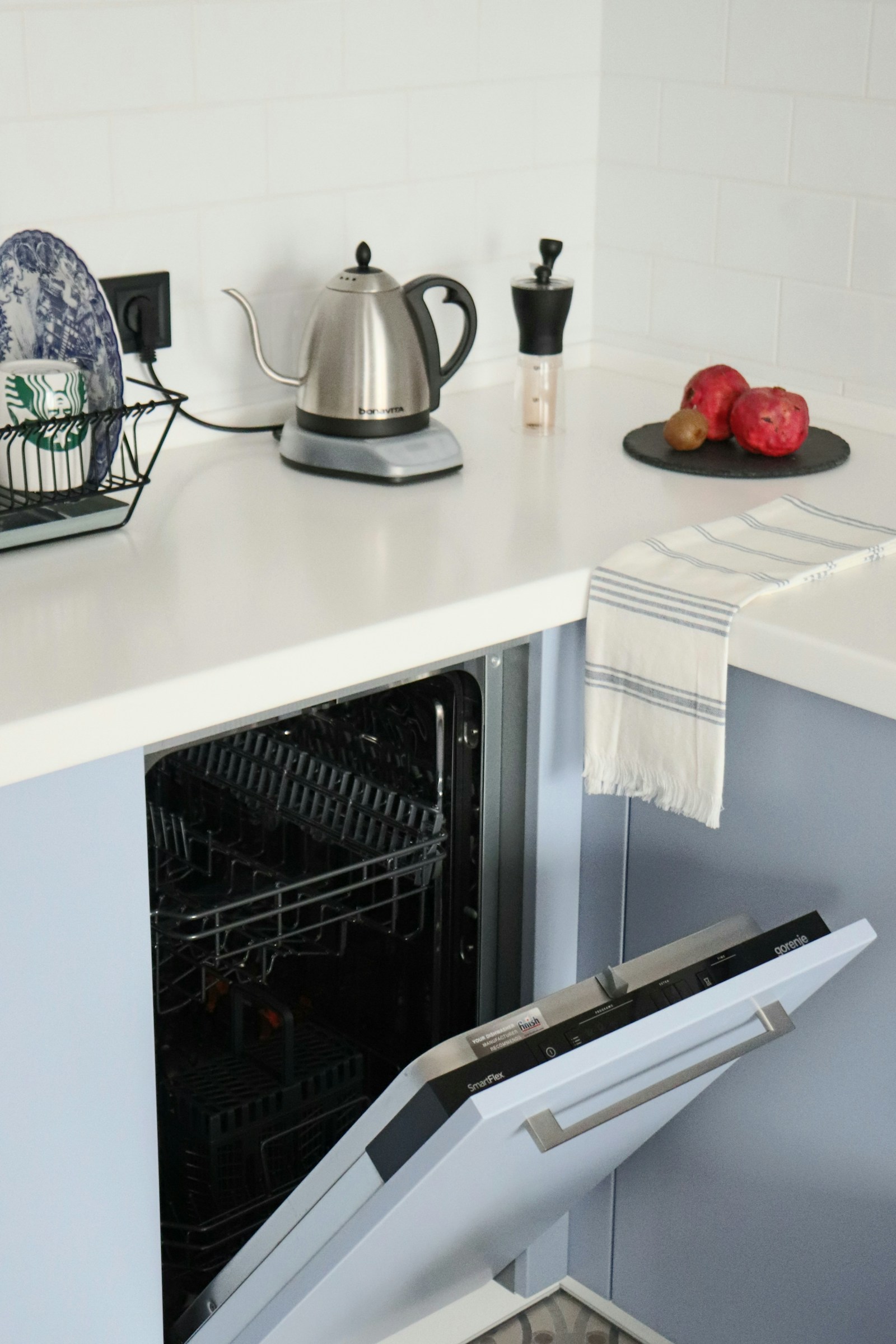
Good dishwasher loading tips do more for clean dishes than almost any setting on a Monogram dishwasher. The machine cleans by spraying water from rotating arms, so how you load determines whether that water reaches every surface. A few habits transform results.
The core dishwasher loading tips
- Face soiled surfaces toward the center where the spray is strongest.
- Do not let tall items or handles block the spray arms from rotating.
- Put plastics and delicate items on the top rack, away from the heating element.
- Avoid nesting bowls or spoons that shield each other from water.
Do not overload
Overpacking is the most common cause of poor cleaning – it blocks spray coverage and stops arms turning. Leave space between items so water can circulate, and run a second load rather than cramming one.
More habits that help
- Scrape large food off, but do not over-rinse – detergent needs something to work on.
- Use rinse aid in hard-water areas to limit spotting.
- Load knives point-down for safety.
If dishes still come out dirty despite good loading, the spray arms may be blocked – see our spray arm blockages guide. For routine care, read the dishwasher maintenance guide.
When loading is not the issue
If cleaning stays poor with good loading and clean filters, the wash pump or diverter may be at fault. Our dishwasher repair service can diagnose it – book a visit. Rack configuration guidance for your model is on the manufacturer’s site, monogram.com.
Loading for a Genuinely Clean, Fully Dry Load
Good dishwasher loading tips are worth more than any rinse cycle, because how you arrange a load decides whether the spray arms can reach every surface and whether water can drain off at the end. A Monogram ZDT has the wash power to clean superbly, but only if the load lets it, most the dishwasher is not cleaning complaints trace back to loading, not the machine.
The governing principle is that the spray arms must spin freely and their jets must reach the soiled surfaces. Everything else follows from that.
- Angle plates and bowls so their soiled faces point down and inward toward the center spray, never stacked flat or nested where water cannot reach.
- Keep tall items, pots, cutting boards, oversized utensils, to the sides and back so they do not block the spray arm sweep or stop it spinning entirely.
- Load the lower rack for plates, pots, and heavily soiled cookware where the strongest jets are; reserve the upper rack for glasses, cups, and small bowls.
- Put plastics on the top rack, away from any heating zone, and accept that they dry less completely because they hold so little heat.
Two specifics save the most service calls. First, never let a long utensil, a pan handle, or a tall stem poke through the rack and jam the spray arm, spin each arm by hand after loading to confirm it turns. Second, keep the area in front of the detergent cup clear; a tall item leaning against it can block the cup from opening mid-cycle, which triggers a C8 or Cup Open condition and leaves the load washed in plain water.
Drying depends on loading too. Turn cups, mugs, and storage lids on an angle rather than perfectly flat, so the condensation drying cycle can sheet water off instead of leaving it pooled in every concave surface. Avoid crowding, dishes touching one another shield each other from both the spray and the air that carries away moisture. Keep the rinse-aid reservoir filled, run the machine with water near 120°F, and a well-loaded ZDT will reward you with dishes that come out both clean and dry.
Book Monogram dishwasher service
If these steps do not resolve it, our certified technicians repair Monogram dishwasher units with genuine parts. Schedule a visit, see what our dishwasher repair service covers, or confirm your model on the manufacturer’s site at monogram.com.